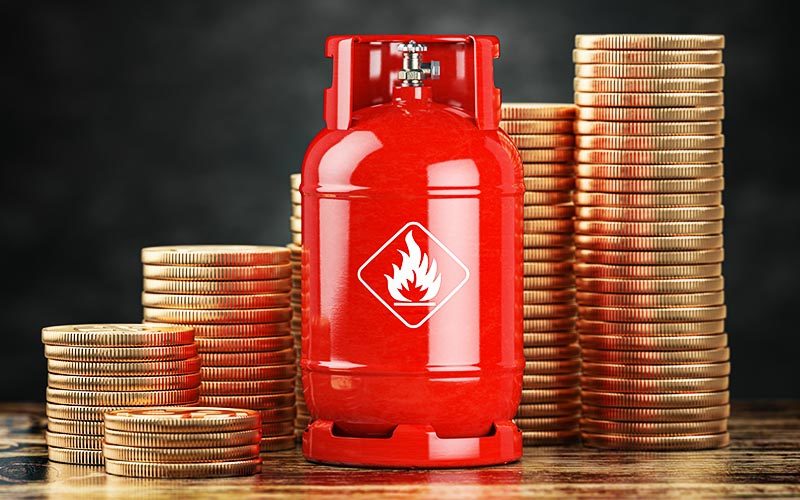
Liquefied petroleum gas is produced during the refining process of crude oil or extracted during the processing of natural gas. The gases produced in this process are mainly propane and butane with small amounts of other gases. These gases are liquefied through pressurization to make them easier to transport and store.
LPG has a high caloric value, meaning that it is a good energy source as it provides a high level of heat. It is also a valuable fuel as it has almost no sulfur content, which results in cleaner burning.[5] About half of the LPG used is consumed for heating and cooking and essentially is used in place of natural gas. The remaining 50% of LPG is split more or less equally between use in cars and industrial uses. Overall, LPG provides less than 2% of the total energy people use but it is still a major alternative to gasoline.
When used, LPG is generally delivered by trucks in a large tank and placed outside a home or other building. In addition, reusable gas canisters are available for powering stoves, heaters, and barbecues. Small canisters of LPG are also available for portable hair styling tools.